North Korean Oil Painting vs. Chinese Oil Painting vs. Russian Oil Painting — A Complete Artistic Comparison
Oil painting has developed differently across cultures, shaped by history, national identity, and artistic philosophy. Among them, North Korean, Chinese, and Russian oil paintings represent three major styles rooted in realism but diverging in technique, emotion, and cultural expression.
This article provides a clear comparison to help collectors and art enthusiasts better understand their characteristics.
1. Historical Roots & Development
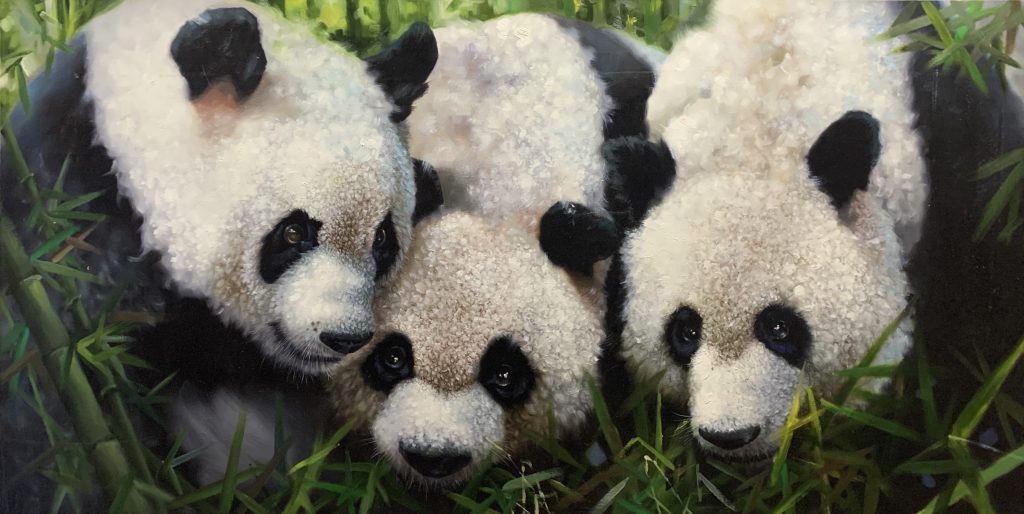
North Korean Oil Painting
- Evolved mainly from Soviet academic realism and Chinese realism after the 1950s
- Strong emphasis on ideological themes, emotional realism, and romantic landscapes
- Artists receive rigorous academic training focused on technical mastery and narrative expression
Chinese Oil Painting
- Influenced by Western classical art, Russian realism, and modern Western contemporary art
- Extremely diverse: realism, impressionism, abstract art, contemporary experimental art
- Developed rapidly after the 1980s with global integration
Russian Oil Painting
- Deep roots in European classical realism, especially the Repin Academy tradition
- Strong, dramatic compositions with rich color layers
- Soviet-era artists developed powerful socialist realism but with high technical depth
Summary
China = diversity
Russia = classical power
North Korea = emotional realism + disciplined technique
2. Core Artistic Style Comparison
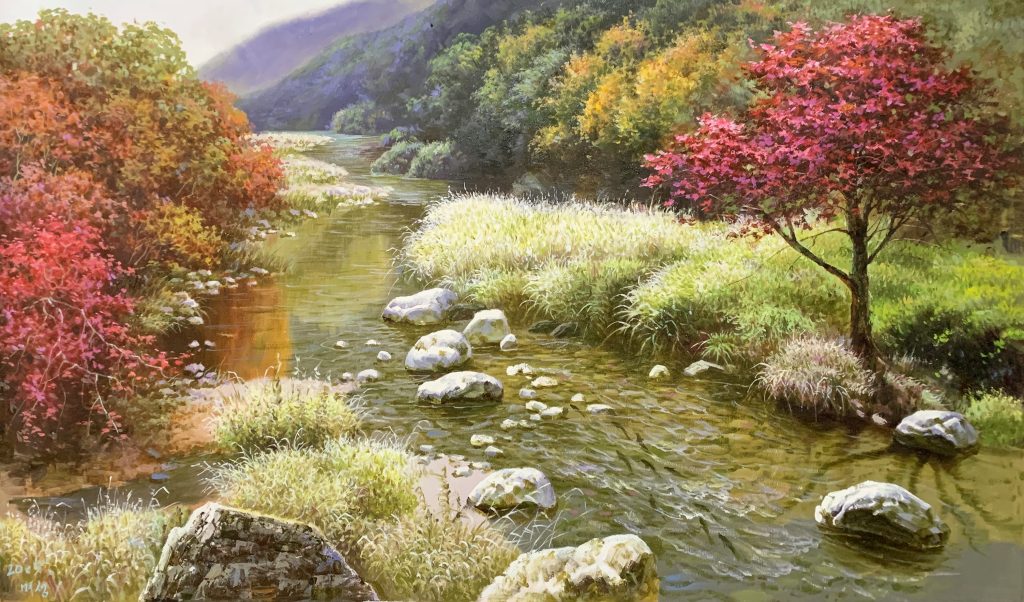
🎨 North Korean Style: Emotional Realism
Features:
- Clean, bright, high-saturation colors
- Smooth, polished brushwork
- Romantic landscapes, idealized figures
- Clear storytelling
- Strong harmony, order, and optimism
Feel: Warm, balanced, emotionally uplifting
🎨 Chinese Style: Wide Spectrum (Realistic → Modern → Abstract)
Features:
- No single unified style
- Chinese realism: highly detailed, dramatic, influenced by Russian academism
- Chinese contemporary art: daring, experimental, conceptual
- Color varies depending on the artist’s school
Feel: Dynamic, wide-ranging, culturally blended
🎨 Russian Style: Deep Realism with Dramatic Power
Features:
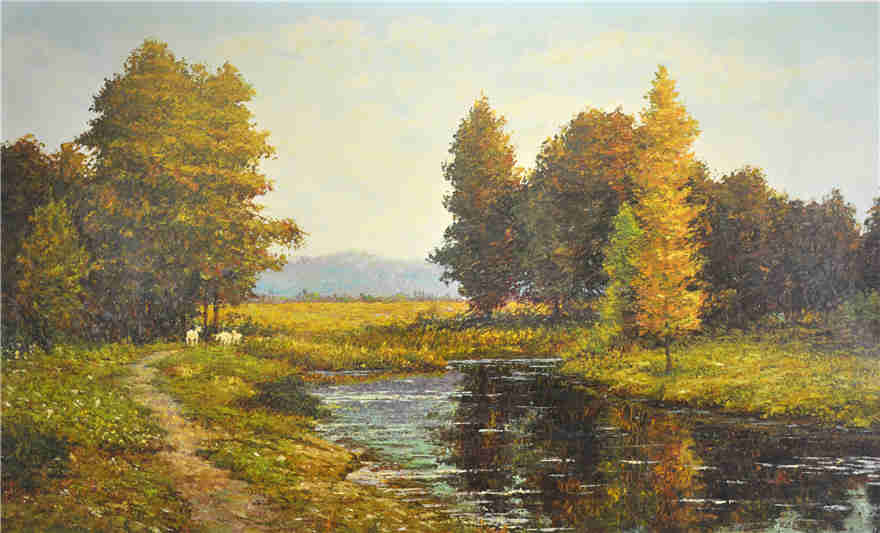
- Heavy brushwork, layered textures
- Rich, dark tones contrasted with bright highlights
- Strong light-and-shadow
- Emotionally intense portraits and landscapes
Feel: Bold, powerful, dramatic, classical European
3. Color Palette Comparison
| Region | Typical Color Style | Visual Impression |
|---|---|---|
| North Korea | Bright, saturated, clear tones; clean transitions | Pure, calm, optimistic |
| China | Very wide range (classical, modern, experimental) | Flexible, varied |
| Russia | Deep reds, ochres, earth tones, dramatic contrasts | Strong, serious, classical |
4. Brushwork & Technique
North Korea
- Fine, smooth brushwork
- High emphasis on clean details
- Academic training similar to classical realism
- Often avoids overly rough textures
China
- Variety: smooth academic → spontaneous expressive → abstract strokes
- Modern Chinese painters experiment more with layered textures
Russia
- Strong, textured brushwork
- Thick layers (impasto) in many classical pieces
- Mastery of anatomy and lighting

5. Themes & Content
North Korea
- Nature landscapes (mountains, rivers, seasons)
- Daily life scenes
- Emotional still life
- Idealized portraits
- Harmony, warmth, positivity
China
- Traditional culture, classical realism
- Modern city life
- Experimental concepts
- Political history (older generations)
- Portraits and figures
Russia
- Harsh landscapes, winter scenes
- Historical narratives
- Strong characters and intense portraits
- Realistic still life with heavy atmosphere
6. Collectors’ Perspective
North Korean Oil Painting
- High technical quality
- Strong emotional warmth
- Unique cultural value
- Still relatively affordable → high potential for appreciation
Chinese Oil Painting
- Huge price range
- From academic masters to contemporary international artists
- Diverse selection to match all interiors and collections
Russian Oil Painting
- Highly respected classical tradition
- Strong presence in global auctions
- Deep realism appreciated by collectors of classical art
7. Which Style Fits Your Home or Gallery?
| Preference | Best Match |
|---|---|
| Bright, positive, harmonious atmosphere | North Korean |
| Classical, powerful, dramatic interior | Russian |
| Diverse styles, modern or traditional décor | Chinese |
| Collectors seeking long-term potential | North Korean / Russian |
| Buyers wanting experimental contemporary art | Chinese |
Conclusion: Three Styles, Three Stories
Although sharing roots in realism, North Korean, Chinese, and Russian oil paintings each express beauty differently:
- North Korean art emphasizes purity, harmony, and emotional warmth.
- Chinese art blends classical technique with modern diversity.
- Russian art displays strong realism, dramatic atmosphere, and deep cultural power.
Each style offers a unique artistic experience and value for collectors. Choosing the right one depends on your aesthetic preference, interior style, and collecting goals.
Click here to learn more about North Korean oil paintings.
Click here to see more landscape-themed works.
Click here to see more animal-themed works.