Koi Fish Oil Painting: 7 Reasons This Vibrant Artwork Inspires
A vivid koi fish oil painting by artist Zhao Chengyun, full of color, symbolism, and movement. A stunning celebration of harmony, prosperity, and life.
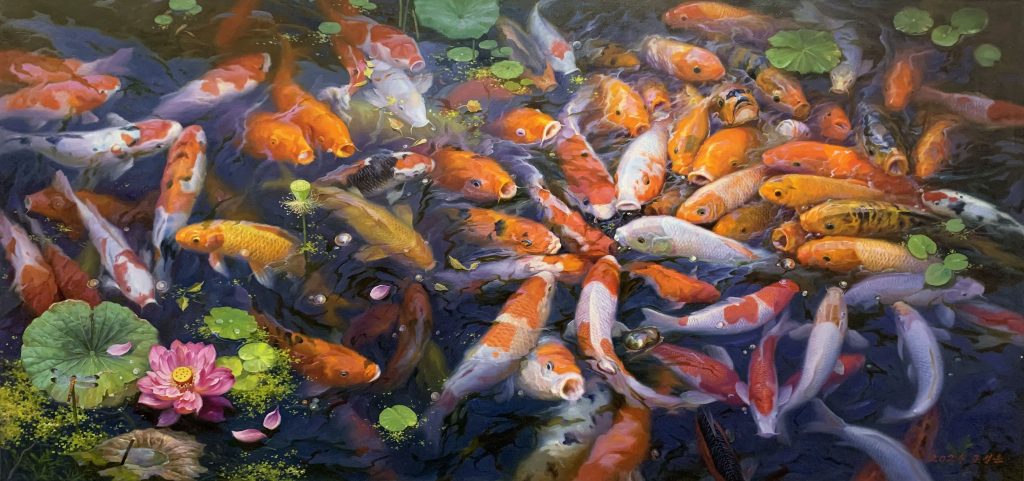
This mesmerizing koi fish oil painting—“Dance of the Golden Koi,” created by DPRK artist Zhao Chengyun and sized 163 × 77 cm—is a breathtaking celebration of color, movement, and symbolic richness. With dozens of koi swirling beneath the gentle ripples of a lotus pond, the artwork radiates prosperity, harmony, and the vital energy of life itself.
Zhao Chengyun’s mastery of realism, combined with the poetic cultural meaning behind koi fish, makes this painting a standout treasure for collectors of Asian fine art.
A Vivid Symphony of Color and Motion
The moment your eyes meet the canvas, you are immersed in a swirling world of orange, red, white, and gold. The koi fish move in circular rhythms, their bodies gracefully twisting under shimmering water. Bright reflections play across the surface, creating a sensation of constant motion.
The artist’s use of deep indigo and violet tones for the water gives the composition dramatic contrast. The koi almost glow against this rich backdrop, embodying vitality and abundance.
This koi fish oil painting feels alive—each fish painted with precise anatomical detail, expressive movement, and a radiant palette.
Lotus Flowers and Lily Pads: Symbols of Purity and Renewal
Floating atop the energetic koi gathering are lotus blooms and lily pads. A large pink lotus in full blossom sits near the lower left corner, accompanied by soft petals drifting gently upon the water.
In Asian art traditions, the lotus symbolizes purity, enlightenment, and rebirth—a serene counterpart to the koi’s dynamic energy.
Dewdrops and floating pond plants add an extra touch of realism, allowing viewers to feel the freshness and tranquility of the pond.
The Cultural Symbolism Behind Koi Fish
Beyond their beauty, koi fish hold deep symbolic meaning in East Asian culture. Collectors will recognize these timeless associations:
- Prosperity & wealth
- Perseverance & strength (swimming upstream)
- Harmony & good fortune
- Success in career or business
- Positive energy and abundance
Zhao Chengyun’s painting amplifies these meanings through composition: the fish gather at the center, swirling toward a shared focal point, representing unity and collective fortune.
7 Reasons This Koi Fish Oil Painting Inspires Collectors
To help art enthusiasts appreciate the richness of this piece, here are seven reasons it stands out:
1. Extraordinary Color Depth
The blending of warm and cool tones creates a glowing, jewel-like surface.
2. Lively Movement
The swirling arrangement makes the painting feel dynamic and full of life.
3. Meticulous Realism
Scales, fins, reflections, and ripples are painted with exceptional detail.
4. Symbolic Power
Koi and lotus imagery make it a meaningful artwork for home or business spaces.
5. Emotional Radiance
The painting radiates optimism, abundance, and positive energy.
6. Perfect Visual Balance
Despite the high activity, the composition remains harmonious and stable.
7. A Signature Example of DPRK Fine Art Realism
Zhao Chengyun blends technical discipline with emotional expression—hallmarks of North Korean realism.
A Refined Statement Piece for Any Interior
With its bold colors and polished composition, “Dance of the Golden Koi” is ideal for:
- grand entryways
- business offices
- restaurants and hotels
- meditation or tea rooms
- contemporary living spaces
Its symbolism of prosperity and harmony makes it especially appropriate for commercial environments seeking positive atmosphere and visual impact.
To learn more about koi symbolism in art, this external resource provides useful context (DoFollow):
https://www.britannica.com/animal/koi
For related themes, you may explore our internal article:
Lotus and Water Motifs in East Asian Oil Painting (internal link placeholder)
Conclusion
“Dance of the Golden Koi” is a masterpiece filled with movement, life, and symbolic resonance. Zhao Chengyun blends realism, cultural depth, and luminous color to create a painting that uplifts, energizes, and inspires.
This koi fish oil painting is not only a visual celebration—it is a symbol of fortune, harmony, and the flowing abundance of life.